

My undergrad was in Computer Science and Engineering. I am fascinated by how technology.

My undergrad was in Computer Science and Engineering. I am fascinated by how technology.
My undergrad was in Computer Science and Engineering. I am fascinated by how technology.
My undergrad was in Computer Science and Engineering. I am fascinated by how technology.
Collaborate with the User Experience Office and university software teams to conduct User Research and Usability testing to identify product improvements, user pain points, and opportunity spaces.
Improved the customer experience of the shopping cart and checkout funnel of the eCommerce product by performing extensive user research, analyzed customer shopping behavior, attitude and pain points, synthesized qualitative and quantitative research data to generate insights, conceptualized design solutions, and generated wireframes.
Translated UI wireframes and mockups to high-fidelity functional prototypes and responsive, interactive features using SAP UI5, D3 controls, HTML, JavaScript and CSS for SAP Analytics desktop and mobile apps.
Collaborated cross-functionally with the UX, Product Management, Engineering and Documentation team from early implementation to deployment of products in an Agile setting.

.png)

.png)
.png)
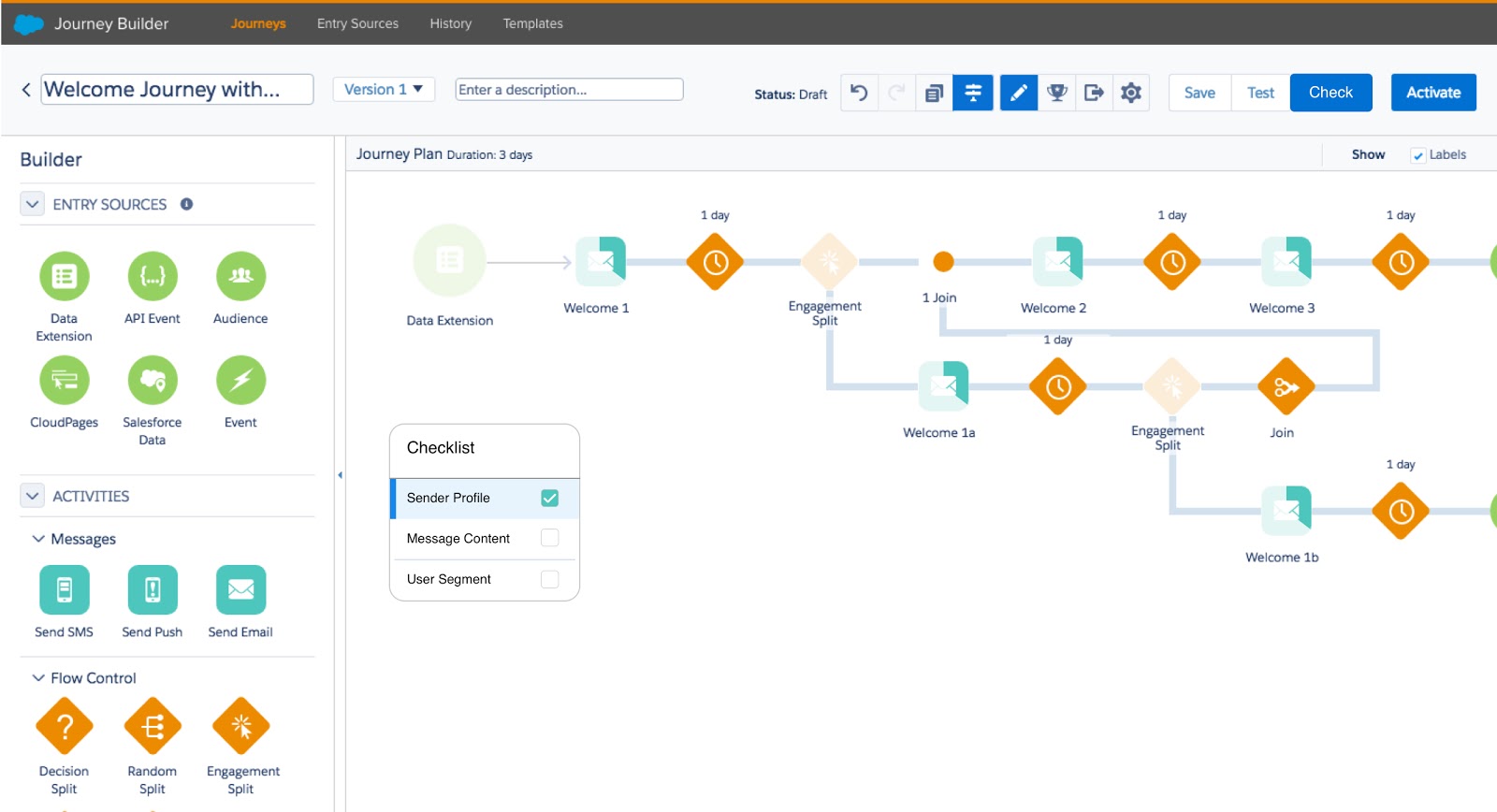
As a part of my Experience Design course, our class partnered with the Salesforce Marketing Cloud team, specifically the product Journey Builder. The experience problem was that marketers feel low confidence while sending the campaign email to target audiences.

Salesforce Marketing Cloud is a provider of digital marketing automation and analytics software and services. It is platform for marketers that allows them to create and manage marketing relationships and campaigns with customers.
As "marketing" becomes more than delivering a piece of print to a broad audience, Marketing Specialist develop and execute marketing campaigns by delivering it to target audiences through channels across email, social media, SMS, etc.
The nuance of a successful marketing campaign lies not only on planning the right content, audience, and time but also should maintain consistency with brand mission, vision, and values.
Despite the sophistication, the current tools lack the ability to distill enough confidence and trust for users to activate and send the marketing "Journey".
The nuance of a successful marketing campaign lies not only on planning the right content, audience, and time but also should maintain consistency with brand mission, vision, and values. Despite the sophistication, the current tools lack the ability to distill enough confidence and trust for users to activate and send the marketing "Journey".
Digital marketers are responsible for translating the beautifully crafted campaign strategy from theory to action. But this transition is not always smooth and simple. Being an expert in the digital marketing domain requires deep understanding of Journey Builder which is a complex yet immensely powerful tool. For an innovative marketer who is passionate about serving millions of customers and driving business, visually mapping out the pathways, interactions configurations is a creative and enjoyable experience. But, be it an expert or novice marketer, the more they look at a journey ,the more they get immune to seeing the nuances and blind-spots within. With the complexity of the tool and a huge amount of audience the fear of making mistakes is inevitable contributing to the low confidence while sending the campaign.

Our concept is to provide marketers with a fresh pair of eyes to check the campaign and gain more clarity and reassurance before sending.
Looking at the journey through a pair of fresh eyes will give new perspectives to the marketers and help the see through the blind-spots and correct the mistakes before it becomes irreversible.

.png)
I like discovering new things. I like to see how the campaign's performing, how my decisions bring some extra revenue and prove to my team, to my colleagues, that our decision was the right one.
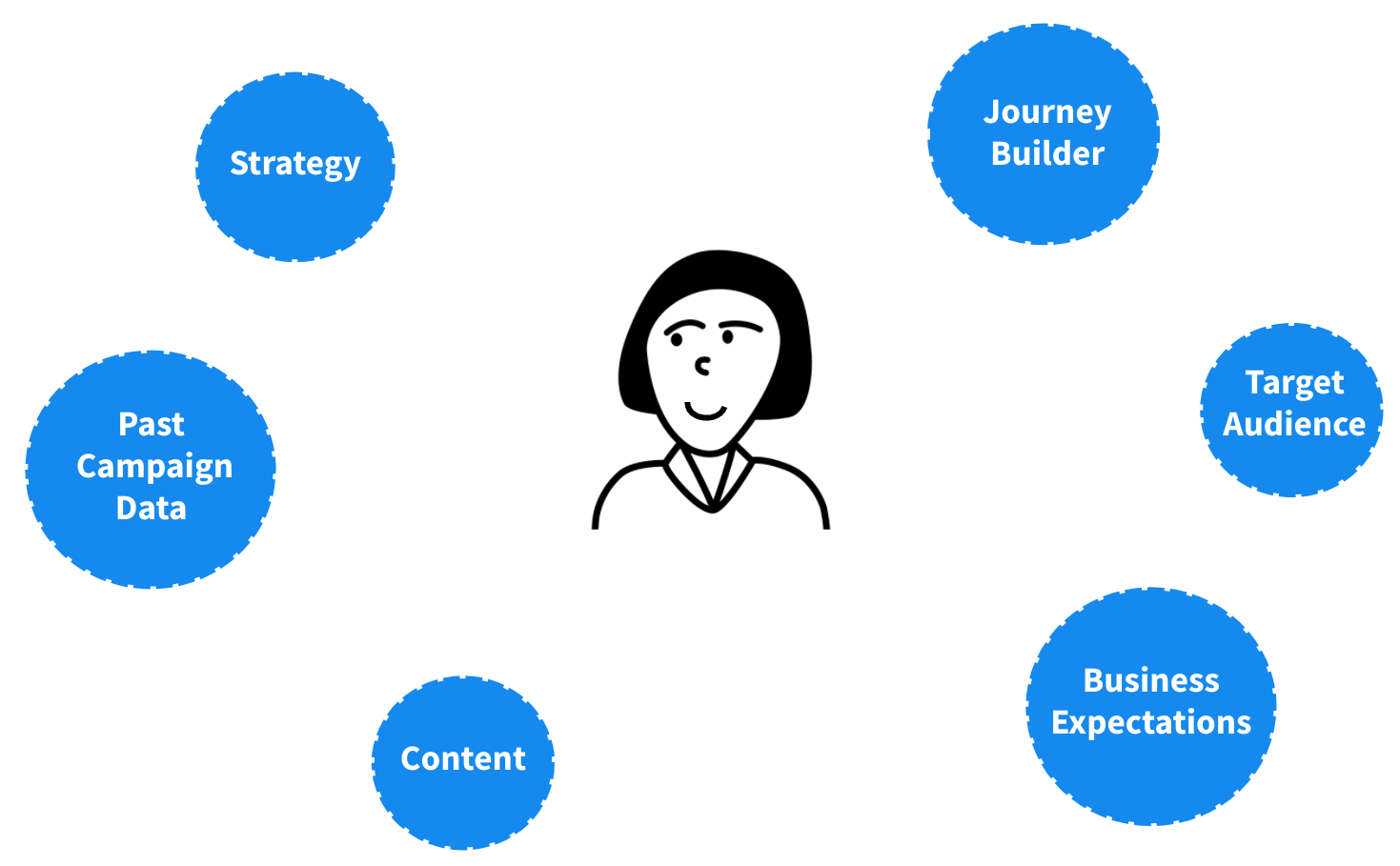
Karen is a Marketing Specialist who is passionate about executing successful campaigns and using analytics to find valuable insights. She spends at least 5 hours per day using Salesforce Journey Builder tool- Executing on the marketing plan, developing, scheduling, and sending marketing communications, Analyzing data to drive decisions and Monitoring campaigns.
Karen is responsible for transforming the campaign strategies to create meaningful, personalized and engaging messages. Prior to Karen’s tasks, the strategy focused teams thinks about how are they going to organize a campaign. Then they provide the campaign strategies to Karen and she has to think about planning and breaking down the campaign to a representational format in journey builder to and send it to the consumers.
Karen is the center point of operations, information flows through her. She looks at data to see how campaign works and how it is going to help with the next one. Once she develops an understanding of the expectations and what the business is looking for to drive their next initiative from a campaign perspective, she breaks the plan down and gives responsibilities to the campaign designers.
Karen needs to understand of the business expectations to drive the campaign initiative.
Karen needs to be able to choose the most effective subsection of the entire population to send the message.
Karen needs to build the most engaging, dynamic, multi-step flows based on in-consumer behaviour using the Journey builder tool.
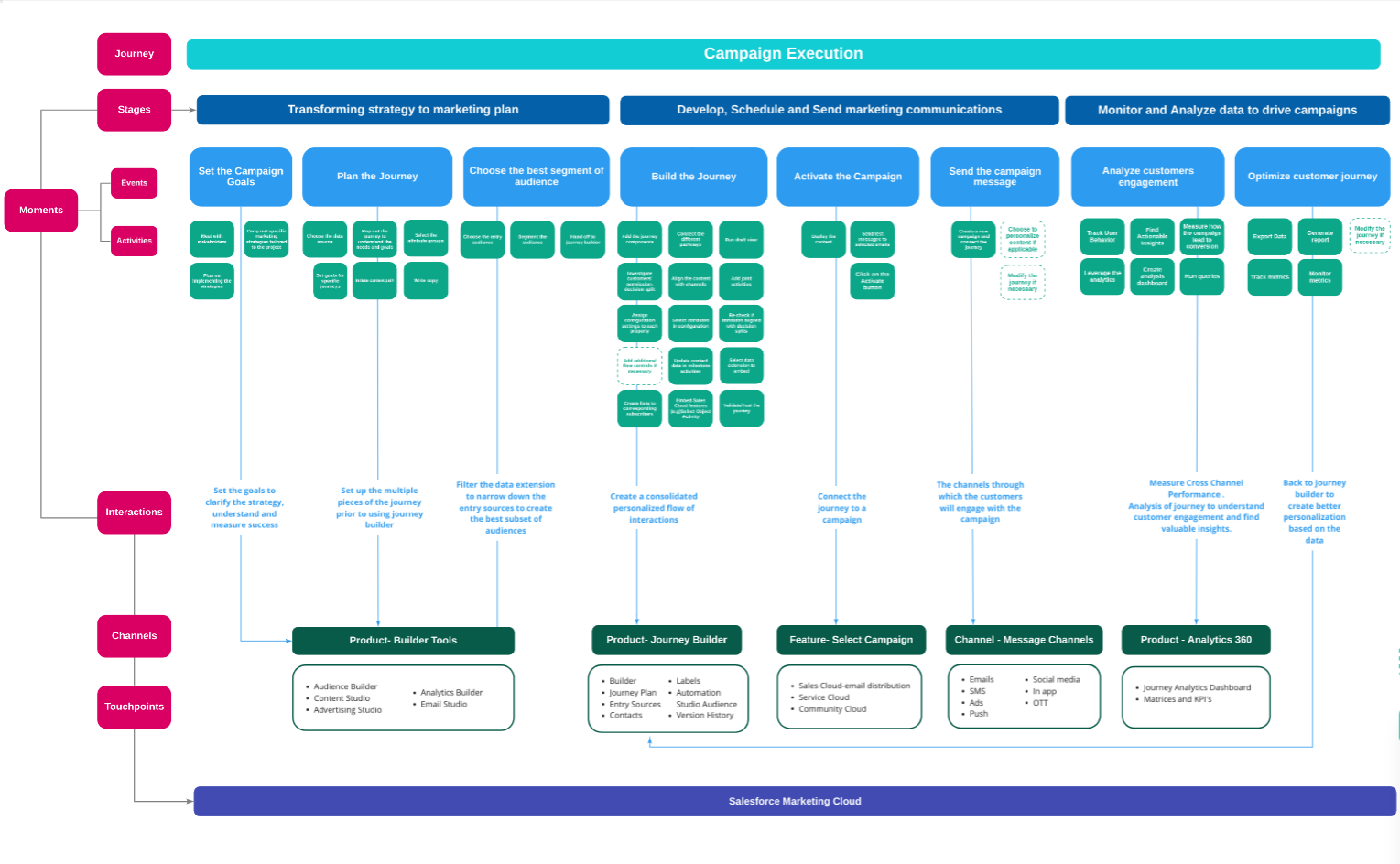
It was essential for us to understand how Marketing cloud is reaching and delivering value to marketing specialists. So we mapped out the different channels and touchpoints to understand the medium as well as points of interaction and the customer engagement ecosystem. The major channels here are the marketing and journey builder applications, and touchpoints are the product features that the user is interacting with. The touchpoints here includes a multitude of digital channels that mainly includes -
Studio Builder Tools to transform the campaign strategy from theory to a concrete plan. These tools are put to action prior to using Journey Builder.
Journey Builder which is used to map out the plan in the tool, build out the majorly massive scale journey and send it out millions of target audiences.
Analytics 360 to understand target audiences engagement with the campaign and discover valuable insights which could inform the future campaigns.
Karen's huge responsibility
This design activity not only helped us dig deeper into the marketing cloud suite and its functionality but also the different ways Karen engages with it. We learned that there are many many ingredients that contribute to making a campaign a failure or success but it’s not just in Karen’s hands. That being said, since she’s the central point of all this information flow, this huge responsibility falls on her.
Not a linear process
Building a journey in the journey builder tool is not a linear process. Even then, it appears to be one because of the users major interaction with journey builder compared to limited interactions with the rest of studio and builder tools. All of the tools are dependent on each other, informing each other to execute the current and further campaign activity in the best possible way.
One of our main pain point in mapping the journey was that the channels clearly deviated from conventional ones like web, mobile, call etc. But we made peace with this fact based on our current scope and understanding that Karen is only interacting with the SFMC products as channels.
We took a look at the existing market to identify how they perform in creating great marketing experiences and scope out what salesforce might be able to do better.
Competitors are highlighting their AI and machine learning technology, including
01. Identifying customer behaviors, emotions, and attributes
02. Predicting the best send-time and content for each customers
Visualization is also a big for communicating the performance of marketing campaign such as
01. calendar view of customer journey
02. timeline view of client-side events
03. tracking touchpoint journeys users take from a multi-path perspective.
Actionable recommendations in each stage of launching a campaign (understanding customers, creating customer journey, analyzing performance) is a plus for marketers in decision making process
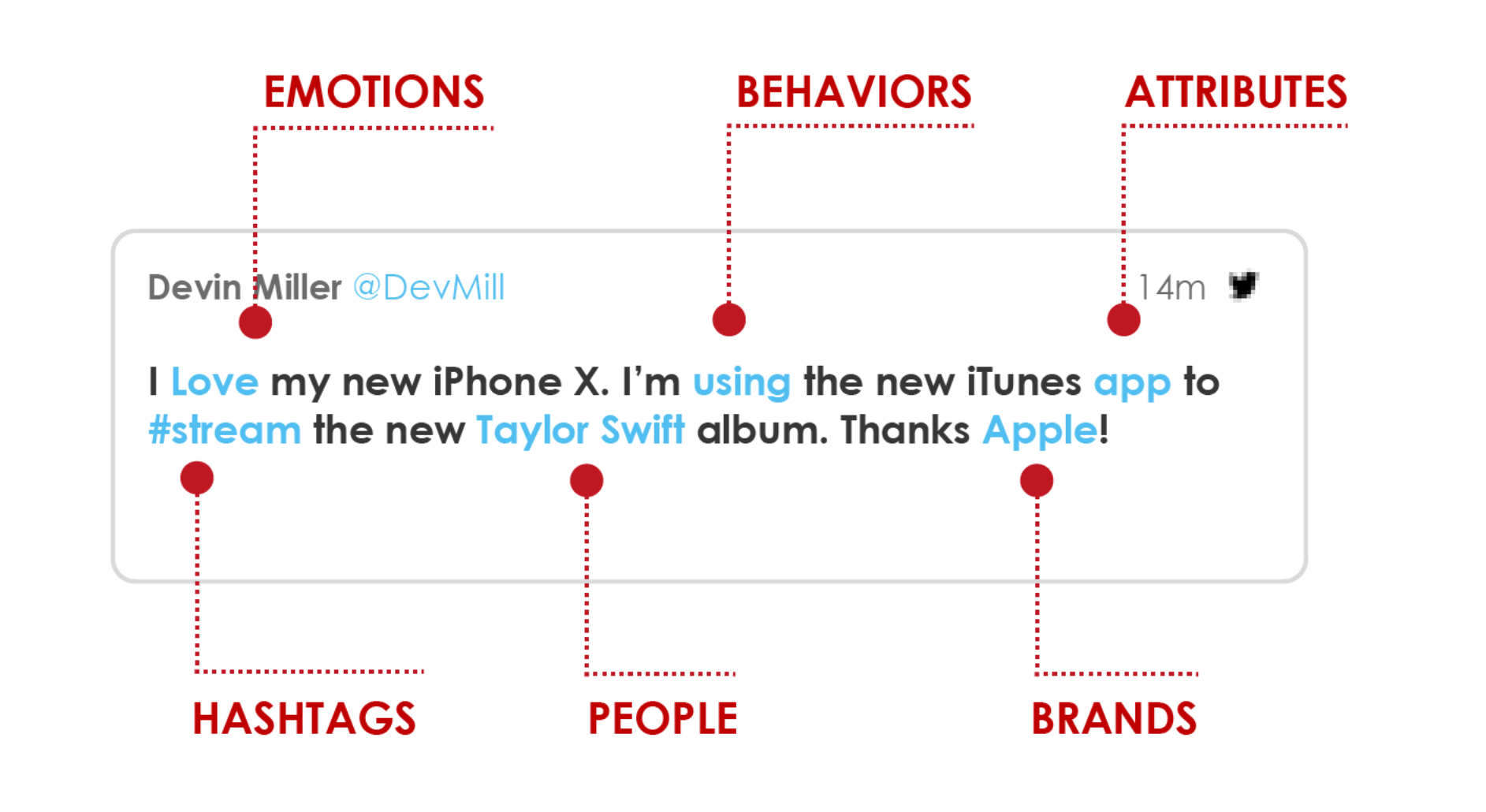
NetBase uses language processing engine that surfaces and analyzes sentiment for every subject in the sentence.
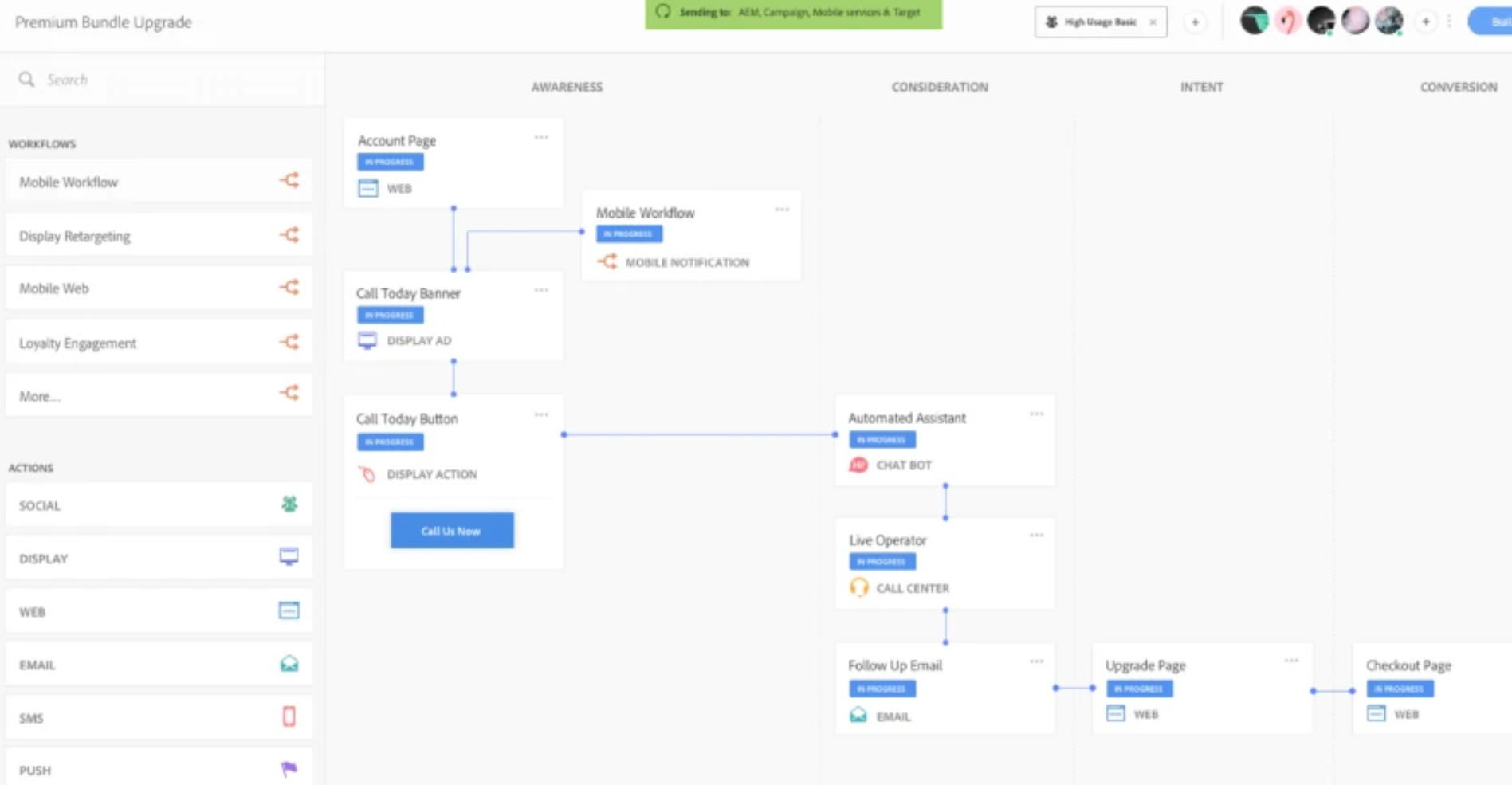
Adobe campaign maximizes customer engagement by sending emails to each recipient when he or she is predicted to best interact with the message based on historical data.
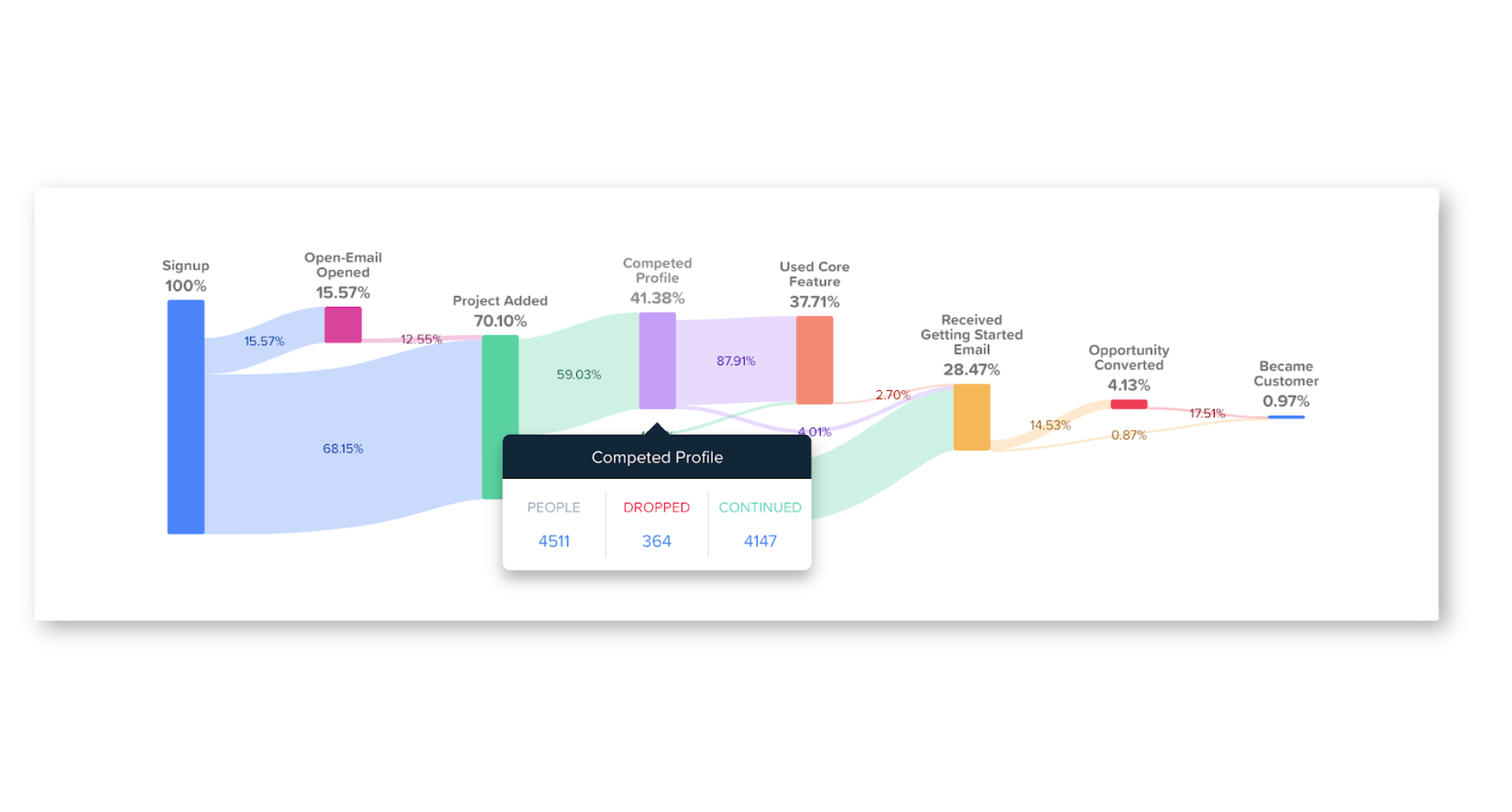
Woopra helps marketers holistically understand how every single touchpoint affects the customer experience to drive growth, retention and customer success.
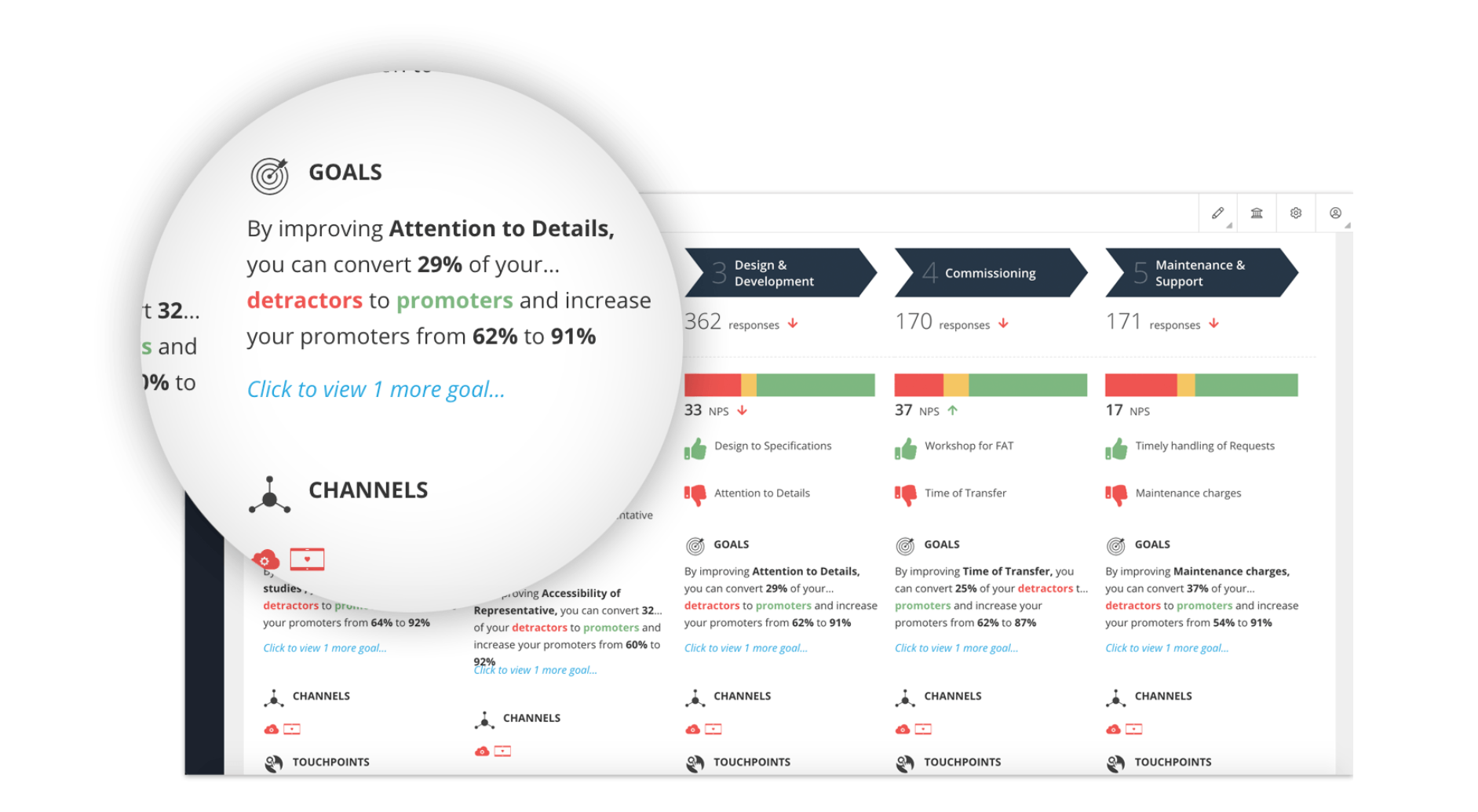
CloudCherry identifies what concrete actions from marketers can impact their business performance positively.
Marketing automation and massive data processing software's share a similar pattern of making a complex system into branches and visualizing each path of their workflow.
There are several common UX solutions to prevent errors from users’ unintentional operations: e.g. preview the result, keywords detection and reminders, and review job history.
Conversational environment and animations on screen stay consistent with physical actions through emotional design helped gain customers trust while they’re using the products.
Previewing the steps that users are familiar with help them trust the process and know what the next step is.
We conducted multiple user interviews to understand their experiences with Journey builder. Here are our insights -

Marketers prefer to learn the tool by doing. Novice marketing specialists lack experience at excelling Journey Builder. The quality of muscle memory contributes to low confidence.

Audiences feedback provides huge encouragement for marketers to know if they have “touched their hearts” and had an impact on their lives. Pressure to constantly analyze consumer engagement and campaign performance contributes to anxiety, stress and low confidence for the future projects.

Audiences feedback provides huge encouragement for marketers to know if they have “touched their hearts” and had an impact on their lives. Pressure to constantly analyze consumer engagement and campaign performance contributes to anxiety, stress and low confidence for the future projects.

Although the complexity leads to low confidence, in this case it contributed to the high capacity of the tool, and a pleasurable experience for the users. The interviewees were not fond of alleviating the complexity to make some important functions more synthesized.

Lack of knowledge and control on data cause lack of confidence. Is the data correct? Is the data updated?... These are all common concerns that marketing specialists have.

An interviewee has a very interesting personal way of testing: she copies the journey and shortens each waiting time to like one hour, and send to her co-workers. In this way, she could test the whole journey in a couple of hours by seeing the exact emails that her end-users are going to receive.
Company: Fandora Shop
What does the company do: Make and sale merchandise of intellectual property such as cartoon character, youtuber, or a specific topic.
Job title: Marketing Planner
Years of work experience: 1 year 3 months
Company: McCann
What does the company do: Ad Agency
Job title: Advertising Marketing Planner
Years of work experience: 1 year 6 months
Company: Indiana University
What does the company do: Education
Job title: Advertising Marketing Consultant
Years of work experience: 6 months
Digital Marketers have a HUGE amount of audience, so the fear of making mistake here comes as an intrinsic aspect of human nature.
This hypothesis is VALIDATED in the interview. We frame this type of inconfidence to the similar inconfidence for people who undergo the experience when using a calculator. We came up with this scenario:

The testing process doesn’t contribute enough to marketer’s confidence because it’s fails to provide marketers the real view of customers.
Even marketing specialists trust the AI to test all systematic errors, they still worry they might make some mistakes when input their commands to the tool, so they want to see the exact result of the journey they build (messages of what end users actually receive)An interviewee has a very interesting personal way of testing: she copies the journey and shortens each waiting time to like one hour, and send to her co-workers. In this way, she could test the whole journey in a couple of hours by seeing the exact emails that her end-users are going to receive.
Even marketing specialists trust the AI to test all systematic errors, they still worry they might make some mistakes when input their commands to the tool, so they want to see the exact result of the journey they build (messages of what end users actually receive)An interviewee has a very interesting personal way of testing: she copies the journey and shortens each waiting time to like one hour, and send to her co-workers. In this way, she could test the whole journey in a couple of hours by seeing the exact emails that her end-users are going to receive.
The process of automation here is not transparent and could act as a blackbox to marketers. The uncertainty and anticipation of the outcome add to the lack of confidence.
Lack of knowledge or control on data cause lack of confidence. Is the data correct? Is the data updated?... These are all common concerns that marketing specialists have. And in many cases, marketing specialists don’t own these datas.One of the scary parts of digital marketing is the mistakes are irreversible. (not like web design) The only way to fix a mistake is to send another one.
The lack of collaboration between planning and execution team causes lack of confidence and sense of achievement. Karen could not directly see the profits she contributed to her business clients within her project lifecycle.
Having several people reviewing the work and sharing the responsibilities definitely help lower the stress.Many marketers map out the journey with other stakeholders collaboratively before building the journey in the digital tool, but in the common cases, there is no more collaboration on executing the journey.Many stakeholders that marketing specialists work with don’t have much knowledge of campaign executing. If the stakeholders want to proofread the journey, the flowcharts that marketing specialists work on probably don’t make much sense to them. Consulting marketing specialists to build the journey is one way of purchasing confidence for those “stakeholders”.
Besides taking a closer look of Karen’s everyday task, we also stepped back to examine Karen as a human being— what are the unfulfilled psychological needs of Karen?
Karen’s everyday life comprises of tasks where many of her psychological needs are addressed. The primary need that drives her is being able to find meaning in what she does as a marketer. We learned from our research that being able to create impactful campaigns that touch people’s hearts gives her a sense of self-actualization and meaning. But, does she get to create or be a part of such impactful campaigns? Or is that too utopian for her to achieve? If she is able to create meaningful work? What other factors are inhibiting her from satisfying this need?
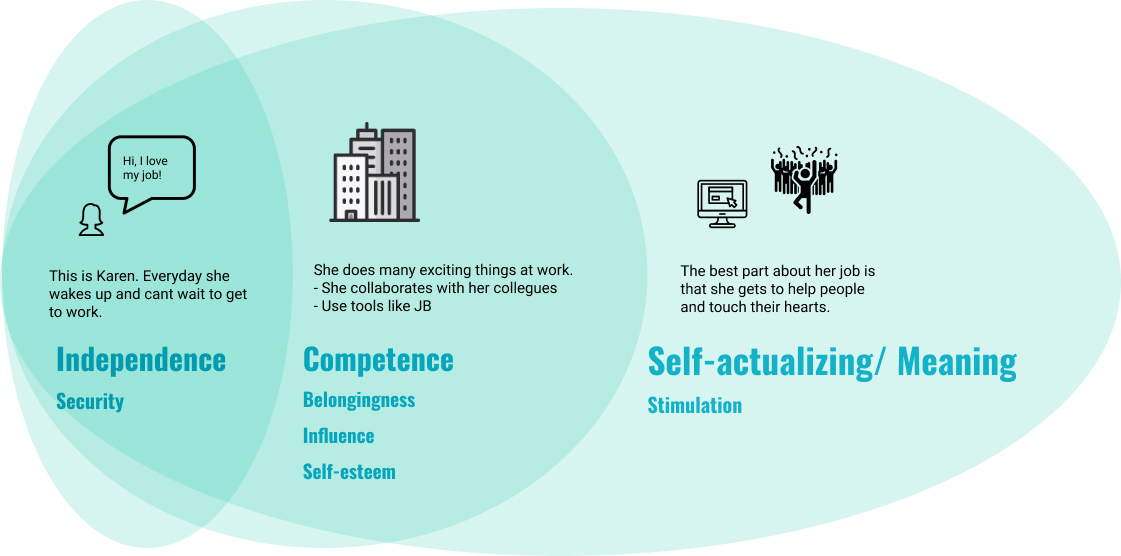
In the following map we created first we tried to understand what it means to be a marketer. Then we moved to discovering who Karen is as a person/ human and then we examined what personal qualities of her makes her valuable as a marketer. And finally how might we enhance her qualities to increase her confidence and see her true potential.
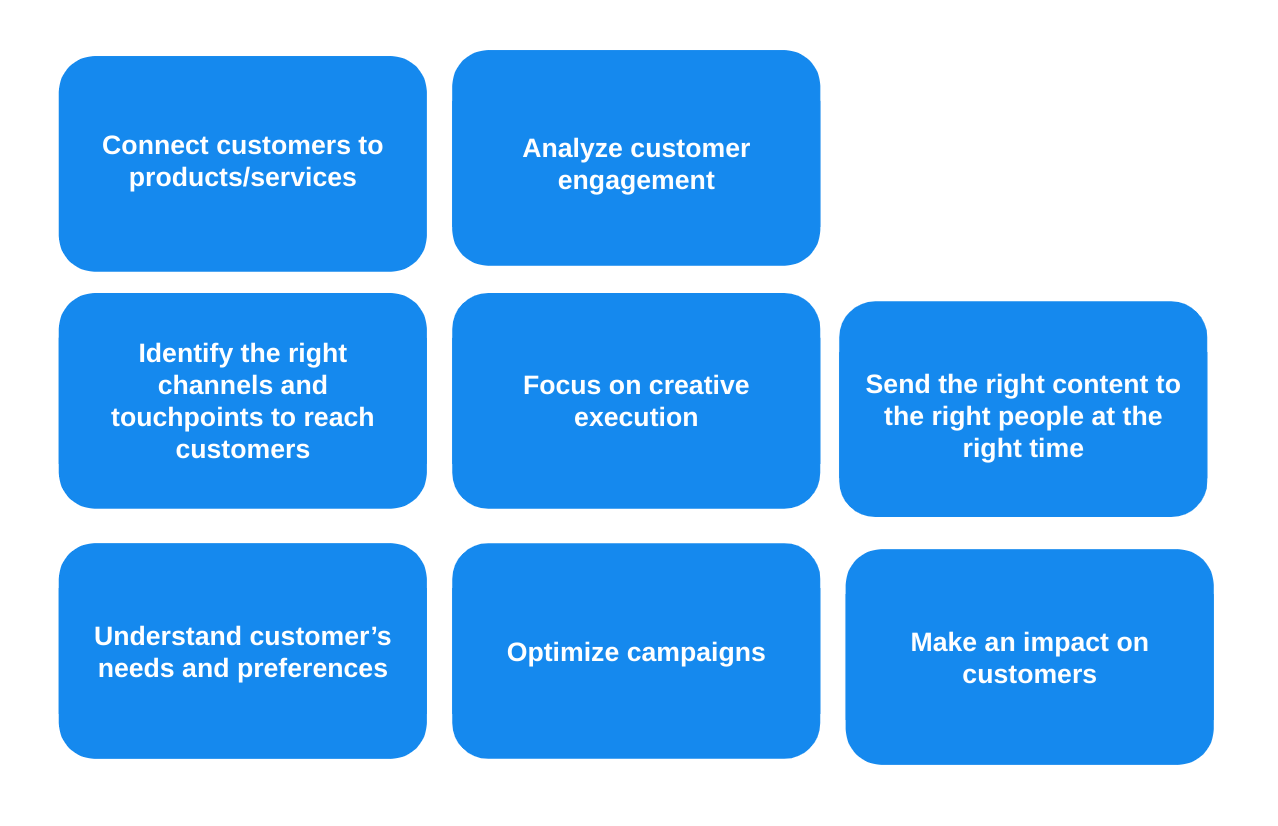
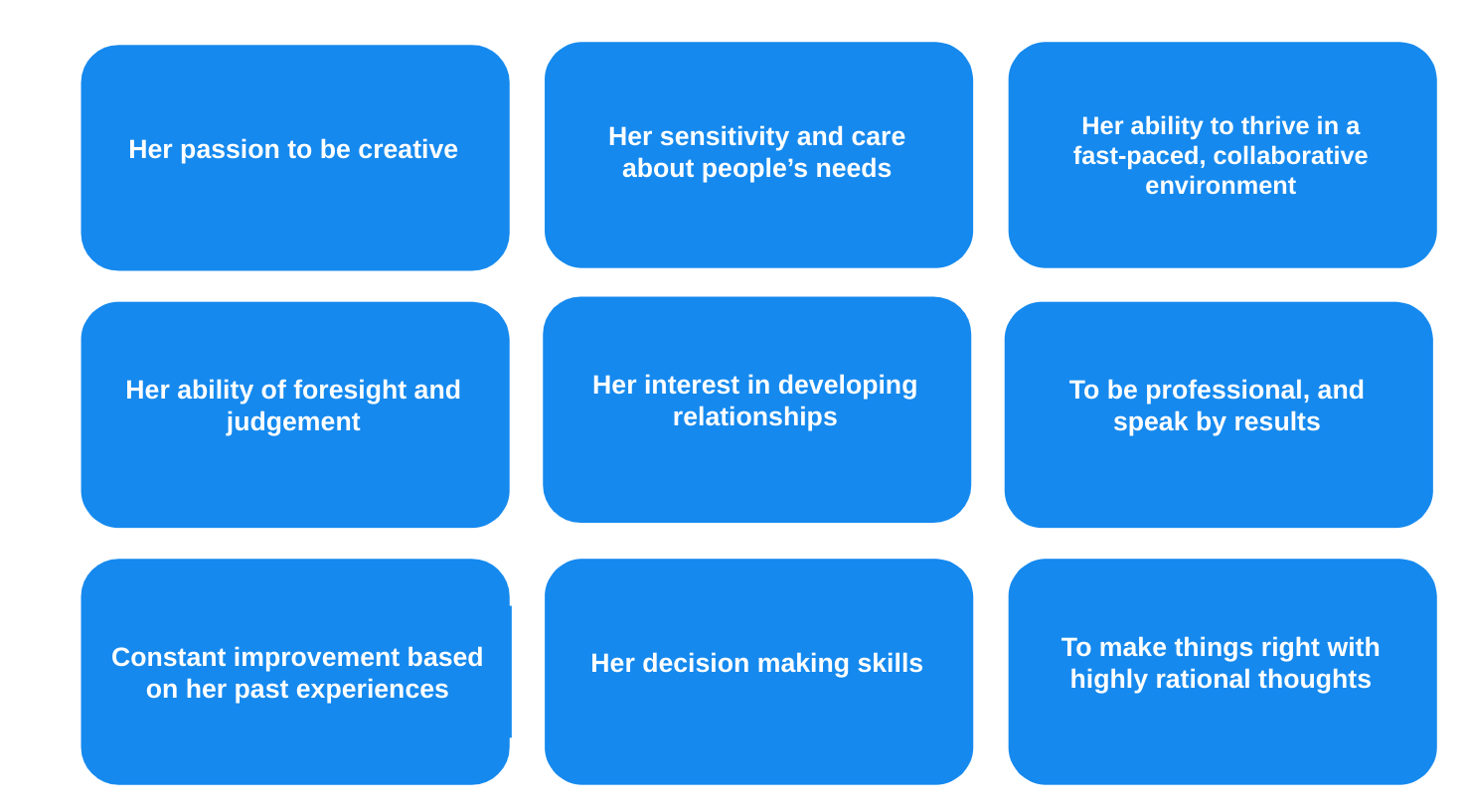
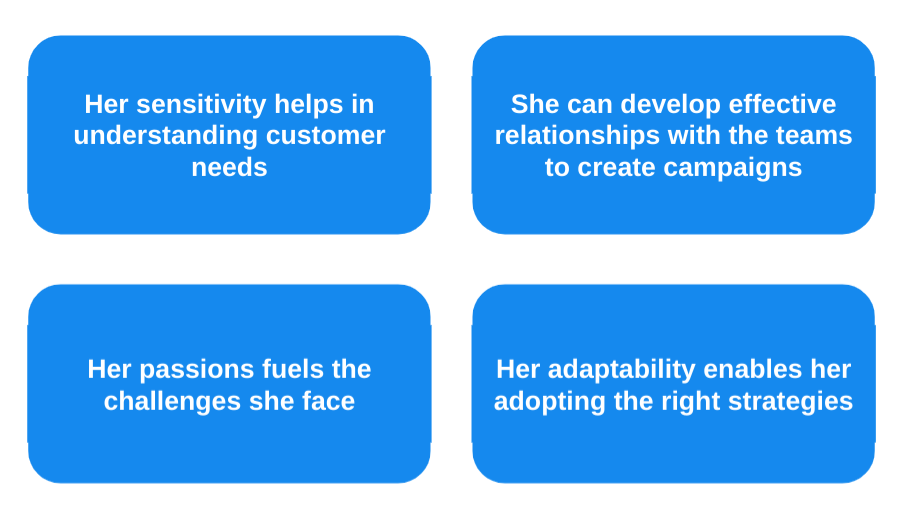
.png)
Experience map looks at the broader context of the human activity beyond the offerings of the organization. The elements of this experience map consists of the actions and steps taken, the visceral, behavioral and reflective emotional state, pain points and opportunities.
Experience Map helped us to organize and digest the data from the interviews and construct a deeper understanding of Karen’s emotions as well as experience journey while using Journey Builder.
.png)
Each activity that Karen performs in the Journey Builder tool consists of multiple layers of emotions. It was super helpful to categorize the emotional state into three layers. It enables us to synthesize and analyze users’ emotion in a very detailed way by which we are able to empathize users much better. By breaking them down within each events she engages with the tool, opportunities can be discovered.
We discovered that, due to the complexity and unpredictability, Karen’s emotion tends to drop down in the campaign building and testing/validation stage. The more familiar Karen is with her job as a marketer and her tools, the less likely she will experience negative emotions throughout the journey.
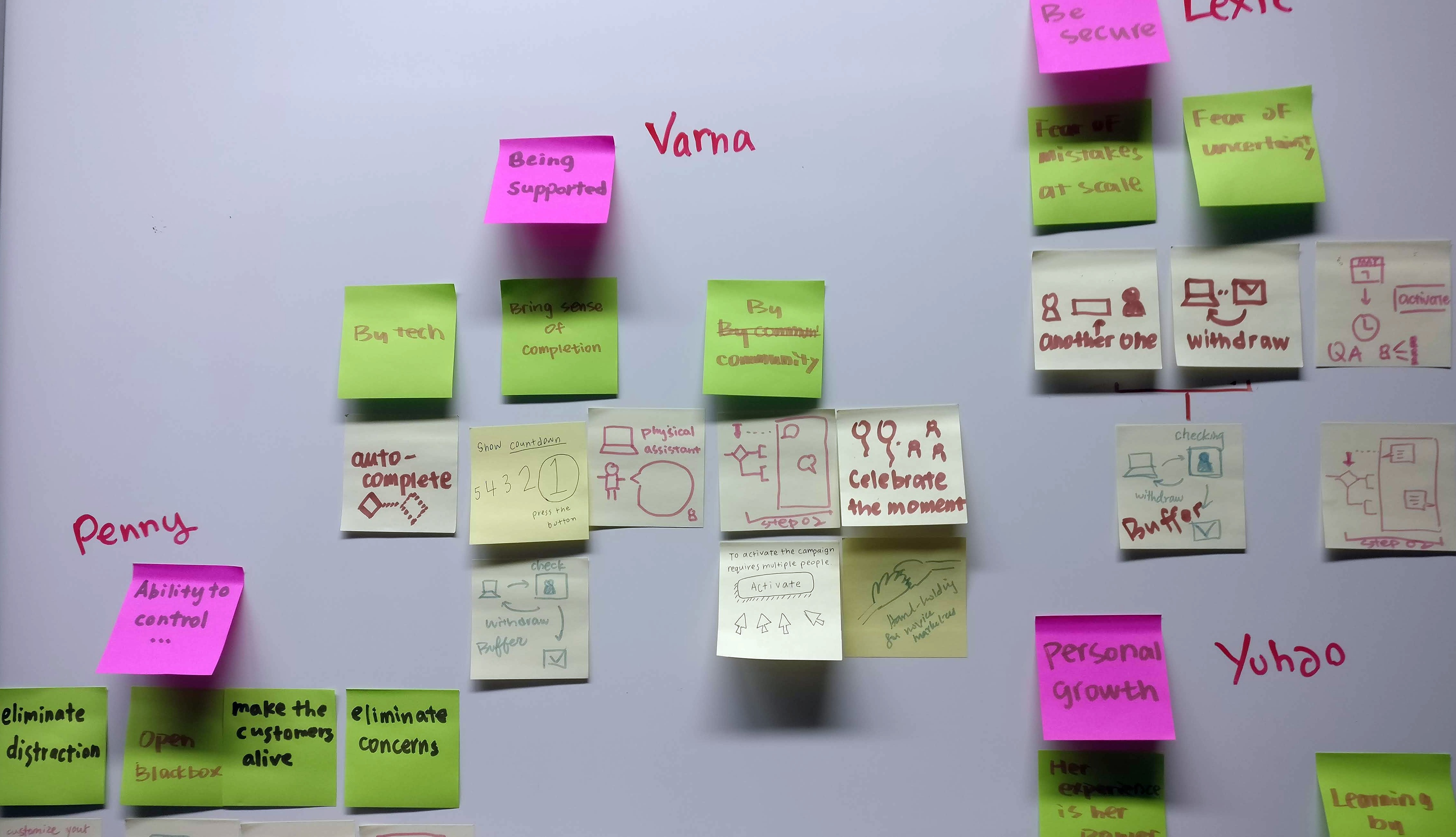
To brainstorm the design concepts, we first sketched ideas individually based on our insights from previous research. Then, we shared out our preliminary concepts with the team and recorded them with illustrations and annotations on sticky notes. As the discussion proceeded, more concepts were generated. Last, to analyze if we have considered different aspects of Karen’s own journey, we categorized the concepts by identifying the different needs each concept is trying to fulfill and sub-themes that the concepts share.
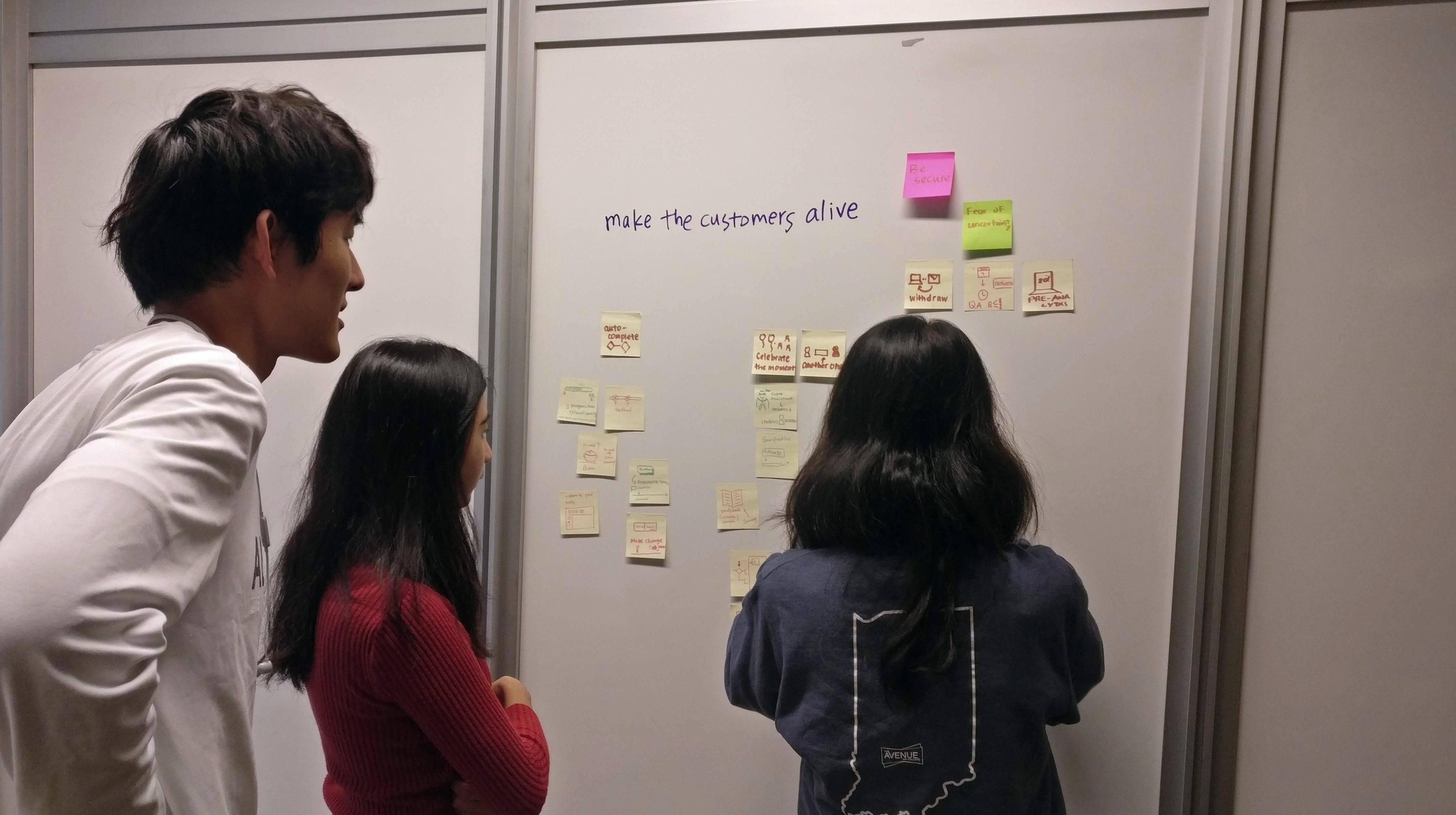
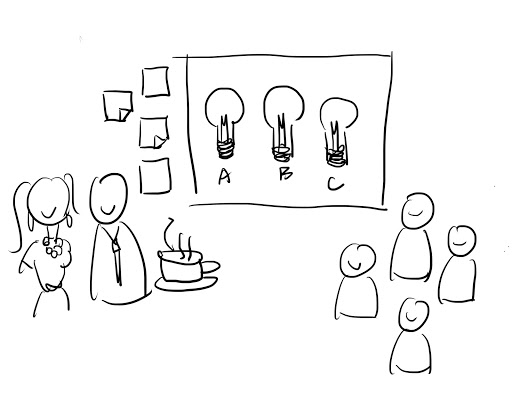
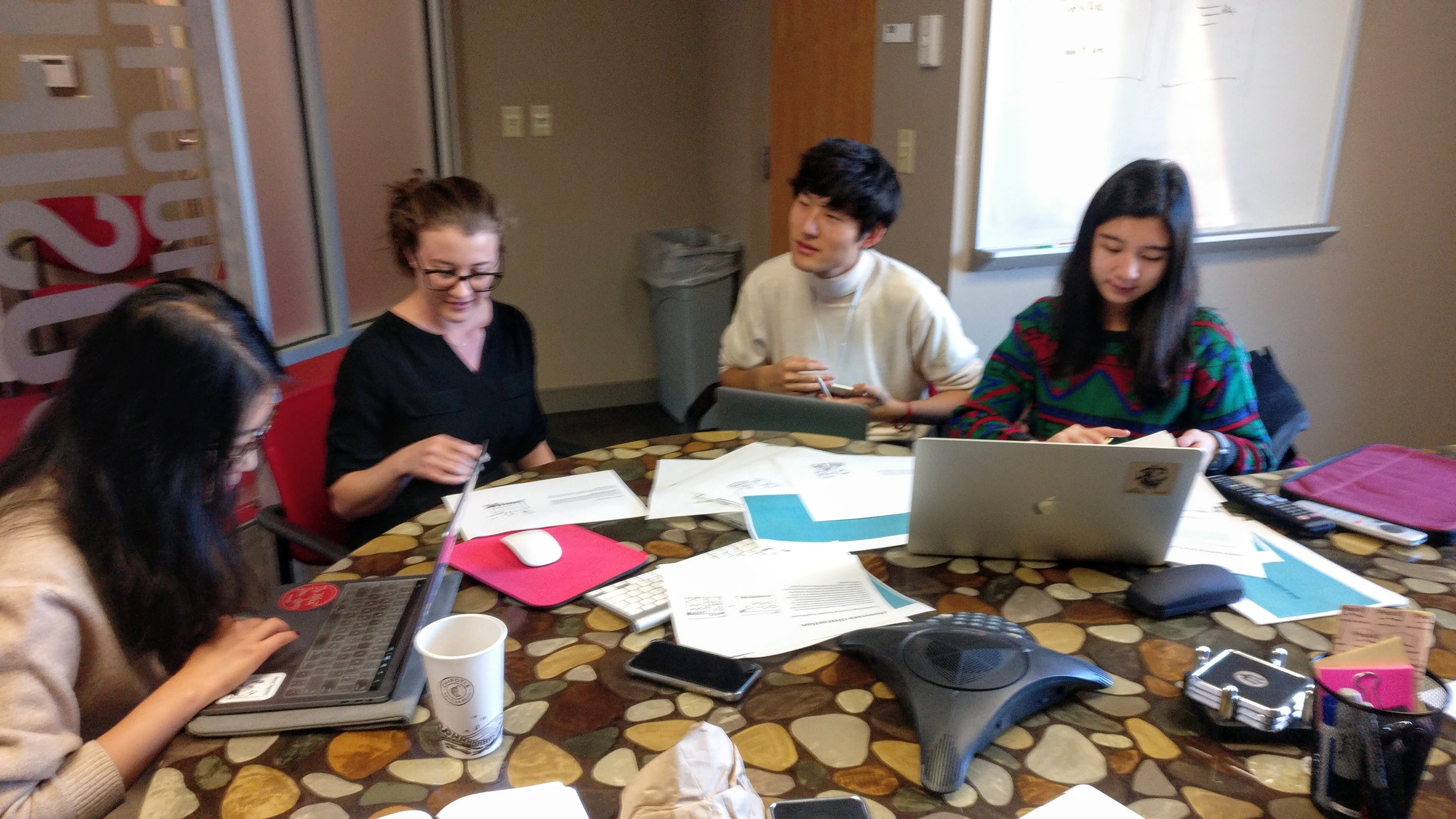
In our ideation phase we conducted co-design session with marketer to verify our design direction and build onto the concepts we have created. We presented our concepts categories one by one and probed her with questions to understand her thoughts and reasons.
As we talked more about marketing cloud and journey builder a new aspect about the tool unveiled. A lot of our concepts had to be moved aside from our new learnings. For e.g. when there are 100 paths to a single journey it is not feasible for the marketer to see 100 customer stories or personas. Another e.g. was that it is not useful to track the progress of the journey being created when it doesn’t know the scale or scope of the journey.
.jpg)
We learned that marketers always worry about the accuracy of the campaign journey they are creating. Once the journey has been created in whatever level complexity it may be in, Karen is so immune to the map that she cannot locate or identify the possible mistakes she would have made. There are so many things that could go wrong with the campaign, thus they have to go back and forth to double check if the information is correct based on the content whenever they feel unsure about. We found this point would potentially lead to the lack of confidence at the time for them to click the “send” button.
The checking/verifying task for marketers is heavy and unpredictable based on the complexities of the campaign.
Marketers do this checking work manually by themselves during the journey building experience, some configurations are hidden inside layers of components, which are unintentionally neglected.
Salesforce currently does not have such a service and marketers checking experience is not guaranteed while interacting among different products in Marketing Cloud Community
One of our main pain point in mapping the journey was that the channels clearly deviated from conventional ones like web, mobile, call etc. But we made peace with this fact based on our current scope and understanding that Karen is only interacting with the SFMC products as channels.
Don Norman in his book “Design of future things” mentions that low confidence can be addressed by a lot of reassurance pandering to both their emotions and intellect. Reassurance is more emotional than informational and it is tricky because there is a fine line between continual reassurance and annoyance. The best reassurance is done subconsciously without having to interrupt their flow.
How can we apply this to Marketers? How can we constantly reassure marketers without breaking their creative flow?
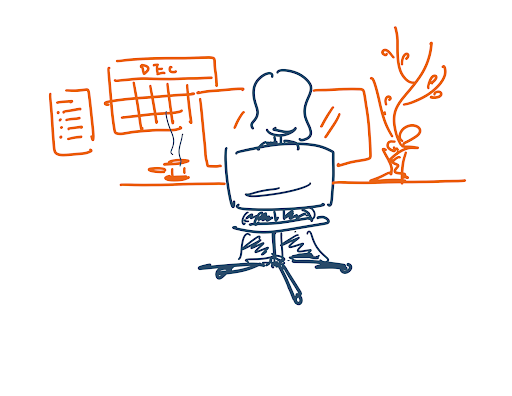
Check & reassurance
Respect Karen’s creative flow
A pair of Fresh Eyes
Increased sense a control
How might we create a checking experience for marketers without breaking their creative flow to provide a sense of control, collaboration, reassurance and increased confidence while sending the campaign?
Whenever we face a big task, we always deconstruct it by either intentionally setting a plan or unconsciously working on it with a certain order. One way of checking the work with a “fresh pair of eyes” is to change the way of deconstructing it, in other words, to walk through the work in a different order.
A typical example of this is shown in the image here, when people want to check a math problem they have solved, an effective way is to use a another method to rework on it. After they finish checking, we want to provide confirmation so as to make checking process more delightful.
.png)
.jpg)
How might we help Karen effortlessly preview the journey she built?
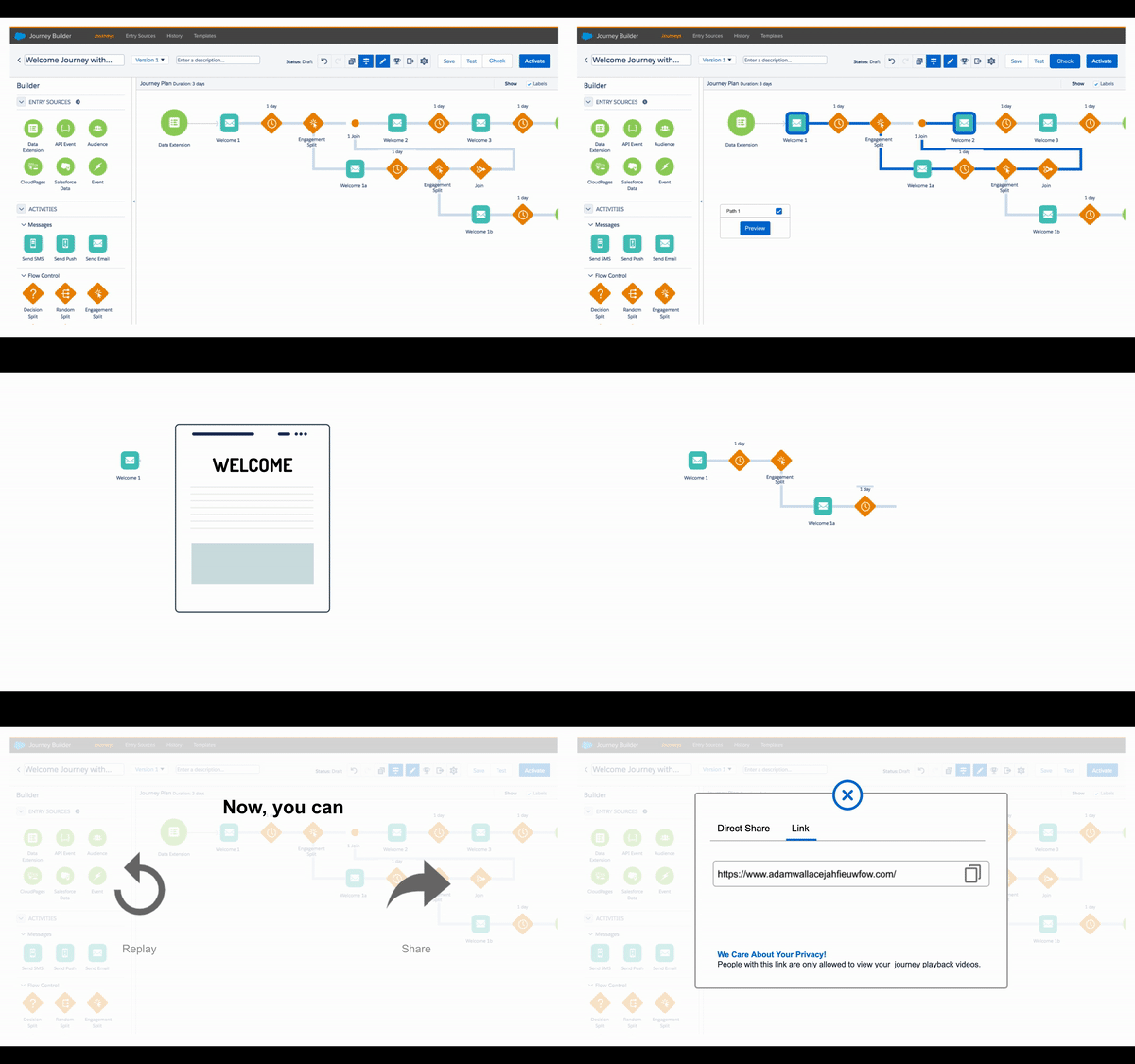
Imagine using a video editor to create a compelling video story. Before she export the video, she will watch the video again (and again) to make sure that everything is good. At that time, she would engage herself in previewing and checking the video instead of focusing on the editing board. What if Karen can "playback" her customer journey? By this, Karen can review the journey in a more linear way as what her customer (audience) will experience in the real world.
.png)

Although both prototypes could provide marketers “fresh eyes” effectively, we decided to move forward with the Prototype 2. Because we need to learn much more about configuration and functionality details to flesh out prototype 1, which is very difficult for us considering the fact that we don’t have access to Journey Builder. When moving forward the Journey Playback idea, we thought two iterations are necessary:

Cut out
Marketers usually have a certain part of campaign that they want to recheck. Only enabling marketers to preview the whole campaign would be so time consuming, so we added a functionality to let users to customize which part to play back.
Send to others
If the marketers have someone else available to check their work, why not also let coworkers to provide “fresh eyes”? We added a feature enabling marketers to send their work to certain people and let them review it.
The “check” feature is a supplement for the marketing team. It is an option, not a requirement. Marketers have the power and flexibility to decide when they need “fresh eyes”. The check feature is purely a “watching” experience now. However, marketers might notice things that go wrong or need to be adjusted. To make changes, they’ll need to end the playback and go back to the journey builder. How might we make this process more seamless? The ideal experience would be allowing marketers to either click or mark a specific point —they can choose to be directed to the interfaces where they can make changes of the configurations immediately or later.
We didn't have access to the Journey Builder tool. We invested time in learning the tool and domain by using other resources, and build on to our assumptions. Do not be intimidated of a completely new domain.
Engage and collaborate with the team early and often to be on the same page.
Maps such as the ones shown in this case study serves as tools and references to build the story and find gaps and opportunity spaces.
Show and tell- bring exemplars, sketches, slides, maps , anything to show in team meetings as well as feedback to spark discussions.
Handle team changes and sudden deadlines and how affect the project progress.
If you like what you see and want to work together, get in touch!
varnadas27@gmail.com